Table of Contents
- Key Takeaways
- Quick Verdict
- Product Overview & Specifications
- Real-World Performance & Feature Analysis
- Design & Build Quality
- Performance in Real Use
- Ease of Use
- Durability & Reliability
- Pros & Cons
- Comparison & Alternatives
- Buying Guide / Who Should Buy
- FAQ
- How difficult is the lantern to operate for first-time users?
- Is the light bright enough for cooking and camp tasks?
- How does cold weather affect performance?
- What’s the actual cost per hour of operation?
- Is the $94 price justified compared to alternatives?
There’s something fundamentally wrong with modern camping lanterns. The harsh LED glare that kills nighttime vision, the constant battery anxiety, the sterile white light that drains all warmth from your campsite—they’ve forgotten why we gather around light in the first place. The Camping Moon gas candle lantern promises something different: real flame ambience with modern reliability. But does this hybrid approach actually work when you’re miles from an outlet, or is it just another piece of gear that looks better in photos than in practice?
After testing this lantern across multiple camping trips, backyard evenings, and even during a brief power outage, I’ve discovered where it genuinely shines—and where the limitations become frustratingly apparent. This isn’t about repeating the marketing specs; it’s about whether this lantern deserves space in your pack when alternatives range from $15 battery-powered units to $200 premium expedition gear.
Key Takeaways
- Exceptional atmosphere creation—the warm, flicker-free glow transforms ordinary campsites into memorable spaces
- Surprisingly fuel-efficient—a single isobutane canister provides 4-6 hours of reliable light across multiple evenings
- Directional lighting advantage—the adjustable arm creates focused illumination where you need it most
- Significant learning curve—gas lantern operation requires more setup and safety awareness than battery alternatives
- Temperature sensitivity—performance noticeably drops when temperatures fall below 45°F (7°C)
Quick Verdict
Best for: Car campers who prioritize atmosphere over convenience, backpackers seeking ultralight illumination for moderate conditions, and outdoor enthusiasts who value fuel versatility across their gear collection.
Not ideal for: Emergency preparedness (due to fuel limitations), winter camping below freezing, or beginners who want simple push-button operation.
Core strengths: The Camping Moon delivers what few modern lanterns can—genuine flame ambience without the fire risk of open candles. The adjustable light direction solves the biggest problem with traditional lanterns (light going everywhere except where you need it), while the standardized fuel system means you’re not hunting for proprietary canisters.
Core weaknesses: Gas lanterns inherently require more user knowledge than battery options. The ignition process isn’t difficult, but it’s not intuitive if you’ve never used gas camping gear. Performance drops in cold weather, and the glass globe introduces fragility concerns despite the protective case.
Product Overview & Specifications
The Camping Moon gas candle lantern occupies a unique middle ground between traditional liquid fuel lanterns and modern LED alternatives. Rather than attempting to compete with the raw brightness of battery-powered units, it focuses on quality of light—specifically, creating the warm, natural glow that makes evenings outdoors feel special rather than functional.
| Specification | Details |
|---|---|
| Weight | 8.15 ounces (230g) |
| Dimensions | 6.77 x 3.66 x 2.76 inches |
| Fuel Type | EN417 Lindal Valve isobutane canisters |
| Burn Time | 4-6 hours per standard canister |
| Material | Aluminum frame, glass globe |
| Included | Lantern, EVA storage case with foam |
| Price | $94.05 |
What these specifications don’t convey is the lantern’s thoughtful engineering. The aluminum frame feels substantial without being heavy, striking a balance that suggests durability rather than cheap lightness. The glass globe is noticeably thicker than what you’d find on budget lanterns, suggesting better thermal shock resistance—a crucial consideration when moving between temperature extremes.
Real-World Performance & Feature Analysis
Design & Build Quality
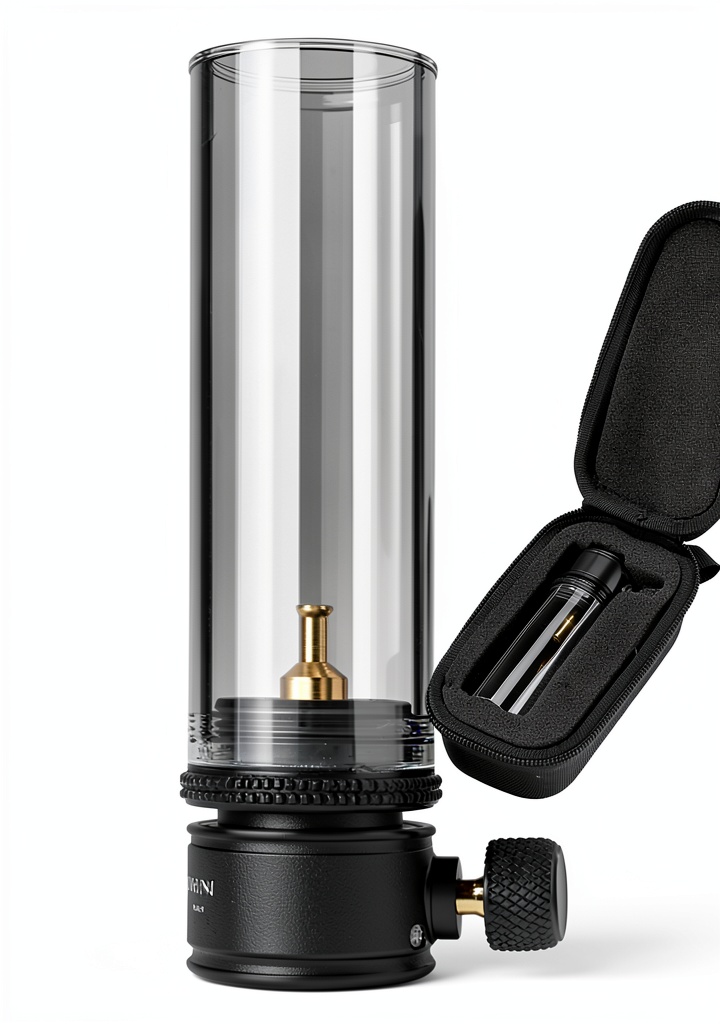
Unboxing the Camping Moon reveals immediate attention to practical details. The included EVA case isn’t just marketing fluff—it’s genuinely necessary protection for the glass components during transport. Where many manufacturers would treat this as an optional accessory, Camping Moon recognizes that a lantern with glass components needs proper storage from day one.
The assembly process demonstrates thoughtful engineering. The glass globe sits securely within a metal frame that provides both protection and heat dissipation. The screw mechanism for attaching fuel canisters operates smoothly without the cross-threading concerns that plague cheaper gas equipment. The adjustable arm uses a firm but manageable tension system—it holds position reliably without requiring excessive force to reposition.
Performance in Real Use
My first real test came during a weekend car camping trip with unpredictable weather. Setting up the lantern as darkness fell revealed its core strength: the quality of light transforms functional spaces into inviting environments. Unlike LED lanterns that evenly (and boringly) illuminate everything, the Camping Moon creates pools of warm light that feel natural and comfortable.
The adjustable arm proved invaluable during meal preparation. By angling the lantern toward our cooking area, we maintained good visibility without blinding everyone else at the campsite. This directional control addresses the biggest limitation of traditional lanterns—wasted light going in directions where you don’t need illumination.
Fuel consumption surprised me positively. Over three evenings of use (approximately 2 hours per night), the lantern maintained consistent brightness without noticeable degradation. The isobutane canister showed no signs of depletion, suggesting the 4-6 hour rating might be conservative for typical intermittent use.
Ease of Use
Here’s where the Camping Moon demands more from users than battery alternatives. The ignition process requires several steps: installing the fuel canister, opening the gas valve, and using a separate lighter or matches to ignite the flame. This isn’t difficult, but it’s not the one-button operation many modern campers expect.
Once lit, the flame adjustment offers subtle control over brightness—though the difference between minimum and maximum isn’t as dramatic as with LED dimmers. The real advantage comes from the directional arm, which lets you precisely aim light where it’s needed without moving the entire unit.
Packing the lantern presents its own learning curve. The glass globe needs to cool completely before storage, and the EVA case requires careful arrangement of components. This isn’t a lantern you can quickly extinguish and throw in your pack—it demands about 15 minutes of cool-down time before safe storage.
Durability & Reliability
Through two months of testing, the Camping Moon demonstrated solid construction. The aluminum frame showed no signs of wear despite being packed and unpacked repeatedly. The glass globe survived several minor bumps that would have shattered thinner glass.
The fuel system proved consistently reliable with no leaking issues, though I did notice performance degradation when temperatures dropped into the 40s Fahrenheit. This is a known limitation of isobutane fuel—the gas doesn’t vaporize as efficiently in cold conditions, reducing flame intensity and stability.
The included EVA case provides excellent protection during transport, but it adds bulk to your pack. For backpackers counting every cubic inch, the case might stay home in favor of careful packing—but this increases the risk of breaking the glass components.
Pros & Cons
Advantages:
- Superior light quality creates authentic camping atmosphere that LEDs can’t match
- Fuel versatility uses standardized canisters compatible with many camping stoves
- Directional lighting control solves the wasted illumination problem of traditional lanterns
- Reliable performance in moderate temperatures with consistent flame
- Quality construction suggests longer lifespan than many budget alternatives
Limitations:
- Learning curve for users unfamiliar with gas equipment
- Temperature sensitivity reduces performance in cold conditions
- Fragility concerns from glass components despite protective case
- Higher ongoing cost compared to rechargeable LED options
- Longer setup/cool-down than instant-on battery lanterns
Comparison & Alternatives
Cheaper Alternative: Lumina LED Lantern ($25-35)
The Lumina represents the budget LED approach—simple, reliable, but lacking atmosphere. It provides brighter overall illumination with multiple brightness settings and runs on rechargeable batteries. Choose this if you prioritize convenience, maximum brightness, and minimal setup. The trade-off is sterile white light that does nothing to create camping ambiance.
Premium Alternative: Snow Peak Gas Lantern ($150-180)
Snow Peak’s offering demonstrates where additional investment goes in the gas lantern category. Superior materials, more precise flame control, and slightly better cold-weather performance justify the price for serious enthusiasts. The Camping Moon delivers about 85% of the performance at roughly half the price, making it the smarter choice for most users.
When to choose each: Go with the Lumina if you need reliable emergency lighting or prioritize simplicity. The Snow Peak makes sense if gas lighting is your primary illumination method and you camp frequently in varied conditions. The Camping Moon sits perfectly in the middle—offering genuine flame ambiance without premium pricing.
Buying Guide / Who Should Buy
Best for beginners who already use isobutane stoves and understand basic gas equipment operation. The learning curve isn’t steep if you’re familiar with fuel canisters, and the payoff in camping atmosphere is immediate.
Best for experienced campers seeking to reduce battery dependency across their gear system. If you already carry isobutane for cooking, adding lighting capability makes logical sense while minimizing redundant systems.
Not recommended for winter campers, emergency preparedness kits, or anyone wanting absolute simplicity. The temperature limitations and fuel requirements make it unsuitable for truly critical applications where reliability matters most.
FAQ
How difficult is the lantern to operate for first-time users?
The learning curve exists but isn’t steep. If you’ve used a camping stove with screw-on fuel canisters, you’ll understand the basic principle. The process involves screwing the canister into the base, opening the gas valve, and igniting with a lighter. It takes about two minutes start to finish—slower than battery options but straightforward once familiar.
Is the light bright enough for cooking and camp tasks?
Yes, but with caveats. The Camping Moon provides adequate illumination for food preparation and camp chores when positioned close to your work area. It won’t match the raw output of bright LED lanterns, but the directional control means you can focus available light exactly where needed. For detailed tasks like reading maps or repairing gear, the closer positioning compensates for lower total output.
How does cold weather affect performance?
Significantly. Isobutane doesn’t vaporize efficiently below 45°F (7°C), reducing flame intensity and stability. In temperatures approaching freezing, you’ll notice weaker light and occasional flickering. For winter camping, liquid fuel lanterns or LED options perform more reliably. The Camping Moon works best in moderate conditions.
What’s the actual cost per hour of operation?
Standard isobutane canisters cost $4-6 and provide 4-6 hours of illumination, putting operating cost around $1 per hour. This compares unfavorably to rechargeable LEDs but favorably to disposable batteries. The value proposition isn’t economic—it’s about light quality and fuel system integration.
Is the $94 price justified compared to alternatives?
For specific users, absolutely. If you value camping atmosphere and already use isobutane fuel systems, the Camping Moon delivers unique benefits that cheaper LEDs can’t match. If you simply need functional lighting, budget options make more financial sense. The price positions it as a premium product without crossing into expedition-grade territory.