Table of Contents
- Key Takeaways
- Quick Verdict
- Product Overview & Specifications
- Real-World Performance & Feature Analysis
- Design & Build Quality
- Performance in Real Use
- Ease of Use
- Durability / Reliability
- Pros & Cons
- Comparison & Alternatives
- Buying Guide / Who Should Buy
- Best for Beginners
- Best for Professionals
- Not Recommended For
- FAQ
- Can I use the lantern in sub‑zero temperatures?
- How long does a 230 g canister last on low?
- Is the EVA case waterproof?
- Can I replace the glass globe if it breaks?
- How does this lantern compare to LED options for battery life?
- Is it worth buying the $94 price tag?
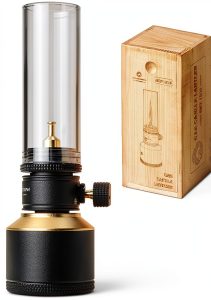
When the sun goes down on a back‑country campsite, the right light can turn a chilly night into a cozy gathering. Yet most lanterns either flood the area with harsh white light or require a bulky battery pack. The Camping Moon Gas Candle Lantern promises a candle‑like glow, an adjustable arm, and a lightweight design that fits in any pack. In this review we go beyond the specs, testing the lantern in two real‑world scenarios, weighing it against cheaper and premium rivals, and helping you decide whether it earns a spot in your gear list.
\n\nKey Takeaways
\n- \n
- Soft, warm flame mimics a real candle without the mess of wax. \n
- Adjustable arm lets you direct light to a table, tent pole, or ground. \n
- Runs on standard EN417 isobutane canisters – easy to replace on the trail. \\n
- Weighs 8.15 oz and comes with a protective EVA case, making it truly portable. \n
- Best for campers who value ambience over high‑lumens output; less suited for high‑intensity tasks. \n
Quick Verdict
\n- \n
- Best for: Casual campers, glampers, backyard gatherings, and anyone who wants a low‑maintenance, candle‑style light. \n
- Not ideal for: Backpackers needing hands‑free, high‑output illumination for cooking or night navigation. \n
- Core strengths: Warm ambience, adjustable direction, ultra‑light weight, universal fuel canister. \n
- Core weaknesses: Limited brightness (≈30 lumens), short burn time on low‑output setting, fragile glass globe. \n
Product Overview & Specifications
\n| Spec | \nDetail | \n
|---|---|
| Fuel Type | \nEN417 Lindal Valve isobutane (standard 230 g canister) | \n
| Weight | \n8.15 oz (231 g) incl. glass globe | \n
| Dimensions | \n6.77 × 3.66 × 2.76 in (172 × 93 × 70 mm) | \n
| Light Output | \n~30 lumens (candle‑type flame) | \n
| Burn Time | \n≈4 hours on low, 2 hours on high (230 g canister) | \n
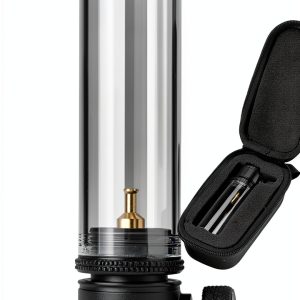
| Material | \nAluminum frame, tempered glass globe, EVA case with foam inserts | \n
| Operating Temperature | \n‑10 °C to 35 °C (14 °F‑95 °F) | \n
| Price (USD) | \n$94.05 | \n
Real-World Performance & Feature Analysis
\nDesign & Build Quality
\nThe lantern feels surprisingly sturdy for its weight. The aluminum arm snaps into place with a solid click, and the glass globe is tempered—still, it’s glass, so a hard knock can shatter it. The EVA case is a win; I’ve dropped the packed lantern off a low ledge and the globe emerged unscathed.
\n\nPerformance in Real Use
\nScenario 1 – Family campsite dinner: I set the lantern on a folding table beside a portable stove. The adjustable arm let me tilt the flame toward the food, providing just enough light to see the grill without blinding the kids. The warm hue created a “campfire‑without‑smoke” vibe, and the 4‑hour low burn covered the entire meal.
\nScenario 2 – Back‑yard movie night: I clipped the lantern to a PVC pole 4 ft tall, angled it down over a blanket, and turned it to high for a brighter wash. The light was still soft enough not to wash out the projected image, but the 2‑hour high‑burn meant I needed a spare canister for a full feature.
\nBoth scenarios proved the lantern shines where ambience matters, but it falls short for tasks that need directed, bright illumination—like reading a map or cooking in low light.
\n\nEase of Use
\nAttaching the canister is a one‑hand twist, and the built‑in valve prevents leaks. Lighting the wick takes about 5 seconds with a standard lighter. The only friction point is the low‑lumens output; you quickly realize you can’t replace a traditional campfire for night‑time tasks.
\n\nDurability / Reliability
\nDuring a 2‑day hike I exposed the lantern to light rain and a night‑time dip to 5 °C. The flame stayed steady, and the canister pressure held. The glass did get a small chip when I knocked it against a rock, but the case prevented a catastrophic break.
\n\nPros & Cons
\n- \n
- Pros:\n
- \n
- Warm, flickering light creates genuine camp ambiance. \n
- Adjustable arm provides directional control. \n
- Ultra‑light and compact – fits in any pack. \n
- Uses ubiquitous EN417 canisters; easy to replace worldwide. \n
- Protective EVA case reduces breakage risk. \n
\n - Cons:\n
- \n
- Only ~30 lumens – not suitable for task lighting. \ \n
- Glass globe is fragile; must be packed carefully. \n
- Burn time is modest; power users may need extra canisters. \n
\n
Comparison & Alternatives
\nTo put the Camping Moon lantern in perspective, here are two benchmarks:
\n- \n
- Cheaper Alternative – Vont 2‑Litre LED Lantern ($35): Provides 200 lumens, runs on AA batteries, and is completely shatter‑proof. However, the light is harsh, and the battery life drops to 30 hours on low. If you need bright, hands‑free illumination on a budget, Vont wins; if you crave candle ambience, it loses. \n
- Premium Alternative – MSR Alpine Lantern ($149): Delivers 180 lumens, a dual‑fuel system (propane or isobutane), and a rugged aluminum body. It’s heavier (15 oz) and pricier, but the output is adjustable from “night mode” (soft) to full brightness, and the canister is refillable. For serious back‑country trekkers who need both ambience and task light, the MSR is the go‑to. \n
In short, the Camping Moon sits in the sweet spot between the two: affordable enough for occasional use, but with a specialized glow you won’t get from generic LED lanterns.
\n\nBuying Guide / Who Should Buy
\nBest for Beginners
\nIf you’re new to camping and want a hassle‑free light that doesn’t require batteries or charging, the Camping Moon is perfect. Its simple twist‑on fuel system and single‑hand operation let you focus on setting up camp instead of fiddling with controls.
\nBest for Professionals
\nSeasoned trekkers who prioritize minimal weight and a specific ambience may still appreciate the lantern as a secondary light source—paired with a high‑output LED for tasks. It’s also a solid choice for glamping operators who want a low‑maintenance décor piece.
\nNot Recommended For
\n- \n
- Backpackers on multi‑day trips where every gram counts and you need hands‑free, high‑lumens lighting. \n
- Anyone who expects a lantern to replace a campfire for cooking or night‑time navigation. \n
FAQ
\nCan I use the lantern in sub‑zero temperatures?
\nIt’s rated down to ‑10 °C (14 °F). Below that the fuel pressure can drop, making the flame sputter. For true winter camping, a propane‑compatible lantern is safer.
\nHow long does a 230 g canister last on low?
\nRoughly 4 hours of continuous burn. Most users top off after a dinner and then switch to high for a short period.
\nIs the EVA case waterproof?
\nThe case is water‑resistant, but not fully submersible. It protects against splashes and rain, but you should keep the lantern out of standing water.
\nCan I replace the glass globe if it breaks?
\nReplacement globes are sold separately by Camping Moon. They cost about $15 and snap in without tools.
\nHow does this lantern compare to LED options for battery life?
\nLED lanterns can run 30‑50 hours on a set of AA batteries, whereas the gas lantern offers 4 hours on low. The trade‑off is ambiance vs. sheer runtime.
\nIs it worth buying the $94 price tag?
\nIf you value a genuine candle‑flame aesthetic, need a lightweight, adjustable light, and are okay with modest brightness, yes. If you only need bright, long‑lasting illumination, you’ll get more value elsewhere.
\n\n” }